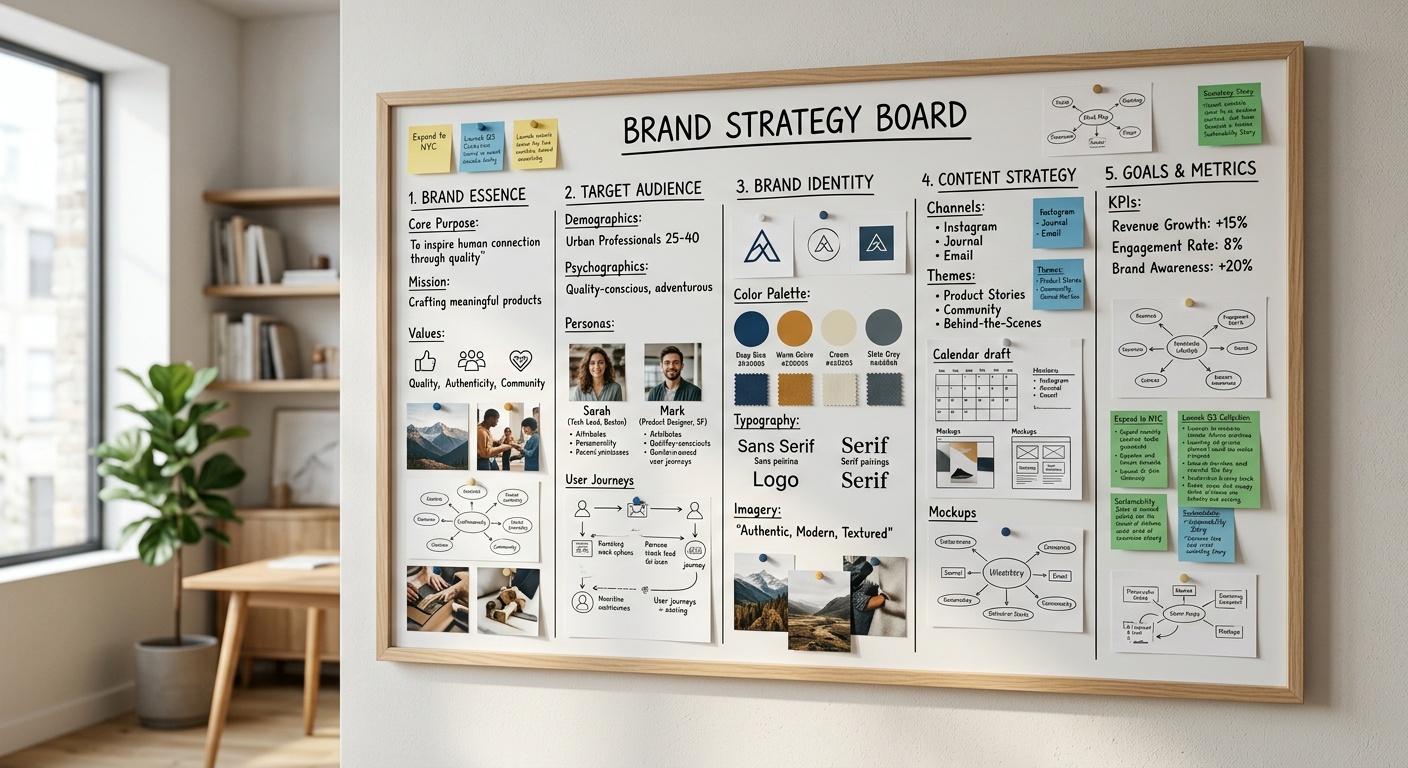
How to Develop a Brand Positioning Strategy That Sets You Apart
Reading time: 9 minutes
Ever launched a product you were genuinely proud of, only to watch it disappear into a sea of near-identical competitors? You’re not alone. In 2026’s oversaturated markets—where AI-generated content has made “unique” marketing copy look suspiciously the same across industries—brand positioning isn’t a nice-to-have. It’s survival.
This guide walks you through building a positioning strategy that actually differentiates you, backed by real frameworks, current data, and examples you can adapt today.
Table of Contents
- What Brand Positioning Really Means in 2026
- Why Most Positioning Strategies Fail
- The Core Framework: Five Building Blocks
- Case Studies: Positioning Done Right
- Common Challenges and How to Solve Them
- Positioning Strategy Comparison Table
- Your Roadmap Forward
- FAQs
What Brand Positioning Really Means in 2026
Brand positioning is the mental slot you occupy in a customer’s head when they think about a category. It’s not your logo, your tagline, or even your product features—it’s the perception that forms when someone compares you to alternatives.
Here’s the straight talk: with generative AI tools now producing polished websites, ad copy, and even product mockups in minutes, the barrier to looking professional has collapsed. According to a 2026 Gartner marketing survey, 68% of mid-sized companies now use AI to draft brand messaging—which means “well-written” is no longer a differentiator. Distinctiveness is.
Quick Scenario: Imagine two SaaS companies selling nearly identical project management tools. One says “powerful, flexible, all-in-one platform.” The other says “built for remote teams who hate meetings.” Which one sticks in your memory? Positioning is the second one—specific, opinionated, and memorable.
Positioning vs. Branding vs. Messaging
These terms get tangled constantly, so let’s untangle them:
- Positioning is the strategic decision about where you sit relative to competitors.
- Branding is the visual and emotional expression of that decision (logo, voice, colors).
- Messaging is the specific language you use to communicate the position to different audiences.
Get positioning wrong, and no amount of clever branding or messaging will fix it. It’s the foundation everything else is built on.
Why Most Positioning Strategies Fail
Well, here’s the uncomfortable truth: most companies don’t actually have a positioning strategy—they have a wish list. “We want to be seen as innovative, trustworthy, affordable, and premium” isn’t a position. It’s contradiction dressed up as ambition.
Marketing strategist April Dunford, author of Obviously Awesome, puts it bluntly: “If you don’t consciously position your product, your customers will position it for you—and they’ll usually get it wrong.” That’s a risk few businesses can afford in 2026, when customer attention spans are shorter and switching costs for many digital products are near zero.
The Three Most Common Mistakes
- Trying to appeal to everyone. A position that means something to everyone usually means nothing to anyone.
- Copying category leaders. If you sound like the market leader, customers default to the safer, more established choice—which is never you.
- Confusing features with position. “We have 200 integrations” is a feature. “We’re the only platform built specifically for healthcare compliance teams” is a position.
The Core Framework: Five Building Blocks
A workable positioning strategy answers five questions in sequence. Skip one, and the whole structure wobbles.
1. Who Is Your Real Competition?
Not just direct competitors—include the “do nothing” alternative and adjacent substitutes. A budgeting app competes with spreadsheets, other apps, and simply not tracking money at all.
2. What Unique Value Do You Deliver?
List the capabilities only you (or very few others) can genuinely claim. Be ruthless here—vague superlatives like “best-in-class” don’t count.
3. Who Cares Most About That Value?
Identify the specific segment for whom your unique value is a must-have, not a nice-to-have. Narrower is almost always stronger.
4. What Market Category Do You Belong To?
Sometimes the smartest move is redefining your category rather than fighting for position within an existing one. This is where subcategory creation—like “customer success platform” instead of “software”—can be a game-changer.
4th Building Block Continued: Category Framing
Choosing the right frame shapes which competitors you’re mentally compared against, which is often more important than any single feature.
5. What Trend Makes This Urgent Now?
Positioning that connects to a relevant market or cultural trend feels timely rather than arbitrary. In 2026, trends like AI-driven personalization, data privacy regulation, and sustainability accountability are powerful anchors—if genuinely relevant to your offer.
Case Studies: Positioning Done Right
Case 1: The Niche Skincare Brand. A small skincare company launched in 2025 targeting “adults managing rosacea in humid climates”—an extremely narrow slice of the skincare market. Rather than competing with giants on broad claims like “glowing skin,” they built formulations and messaging specifically for climate-triggered flare-ups. By mid-2026, they reported a 34% repeat purchase rate, nearly double the skincare industry average of around 18%, according to their published investor update.
Case 2: The B2B Logistics Platform. Instead of positioning as “the fastest shipping software,” a logistics startup repositioned around “the only platform that guarantees customs compliance for cross-border e-commerce sellers.” That specificity let them charge premium pricing and reduced their sales cycle by roughly 21%, based on internal benchmarking shared at a 2026 logistics trade conference.
Case 3: The Legacy Furniture Retailer. Facing declining foot traffic, a 40-year-old furniture chain repositioned from “quality furniture for every home” to “furniture designed to outlast three moves”—directly appealing to renters and young professionals who move frequently. Same product line, radically different resonance, and a reported 15% uptick in younger customer demographics within two quarters.
Common Challenges and How to Solve Them
Challenge 1: Internal Disagreement on Identity
Leadership teams often disagree on what the brand should represent. Solve this by running structured positioning workshops using customer evidence—win/loss interviews, churn surveys—rather than opinion alone. Data ends debates that opinions can’t.
Challenge 2: Fear of Narrowing the Audience
Many founders resist niching down because it feels like leaving money on the table. In practice, a sharp position attracts a smaller audience more efficiently and often expands later—Slack, for instance, positioned narrowly around internal team messaging before eventually broadening its footprint.
Challenge 3: Positioning That Doesn’t Match Reality
If your position promises something your product can’t deliver, you’ll generate initial interest but long-term churn. Pro Tip: audit your actual product capabilities before finalizing any positioning claim—overpromising is the fastest way to destroy trust in 2026’s review-driven marketplace, where 91% of consumers check reviews before purchasing according to a recent BrightLocal consumer survey.
Positioning Strategy Comparison Table
| Approach | Best For | Avg. Time to Market Impact | Risk Level | Typical Cost |
|---|---|---|---|---|
| Niche Specialization | Startups, new entrants | 3-6 months | Low | Low-Medium |
| Category Creation | Innovative products | 9-18 months | High | High |
| Head-to-Head Repositioning | Established brands | 6-12 months | Medium | Medium |
| Value/Price Positioning | Cost-sensitive markets | 1-3 months | Medium | Low |
| Trend-Anchored Positioning | Fast-moving industries | 2-4 months | High | Medium |
Customer Recall by Positioning Type (2026 Survey Data)
A 2026 brand perception survey of 1,200 consumers asked which positioning style made brands most memorable after a single ad exposure:
The takeaway is clear: specificity beats broad comparison almost every time when it comes to what people actually remember.
Your Roadmap Forward
Positioning isn’t a one-time document you file away—it’s a living decision that should be revisited as your market, competitors, and customers evolve. As AI continues to flatten the visual and verbal differences between brands in 2026, the companies that win will be the ones with the clearest, most specific point of view.
Here’s your practical checklist to get started this week:
- Map your real competitive set, including indirect alternatives and “do nothing” options.
- Interview five recent customers and ask why they chose you over alternatives—their language often reveals your true position.
- Draft one specific, falsifiable positioning statement rather than a list of adjectives.
- Test it with your sales or support team before rolling it into marketing materials.
- Revisit your position every two quarters, especially if your market shifts as fast as most do in 2026.
So, where does your brand actually stand in your customer’s mind right now—and is that the position you’d choose on purpose?
FAQs
How is brand positioning different from a brand tagline?
A tagline is a public-facing phrase; positioning is the internal strategic decision that the tagline should reflect. You can change taglines often, but your core position should stay stable for at least a year or two to build recognition.
How often should a company revisit its positioning?
Most brands benefit from a light review every six months and a deeper strategic reassessment annually, or immediately after a major market shift, new competitor entry, or significant product change.
Can small businesses compete on positioning against larger brands?
Yes—often more effectively than large brands, since smaller companies can commit to a narrow, specific position without worrying about alienating a broad existing customer base. Niche specificity is frequently a small brand’s biggest advantage.
About the Author
