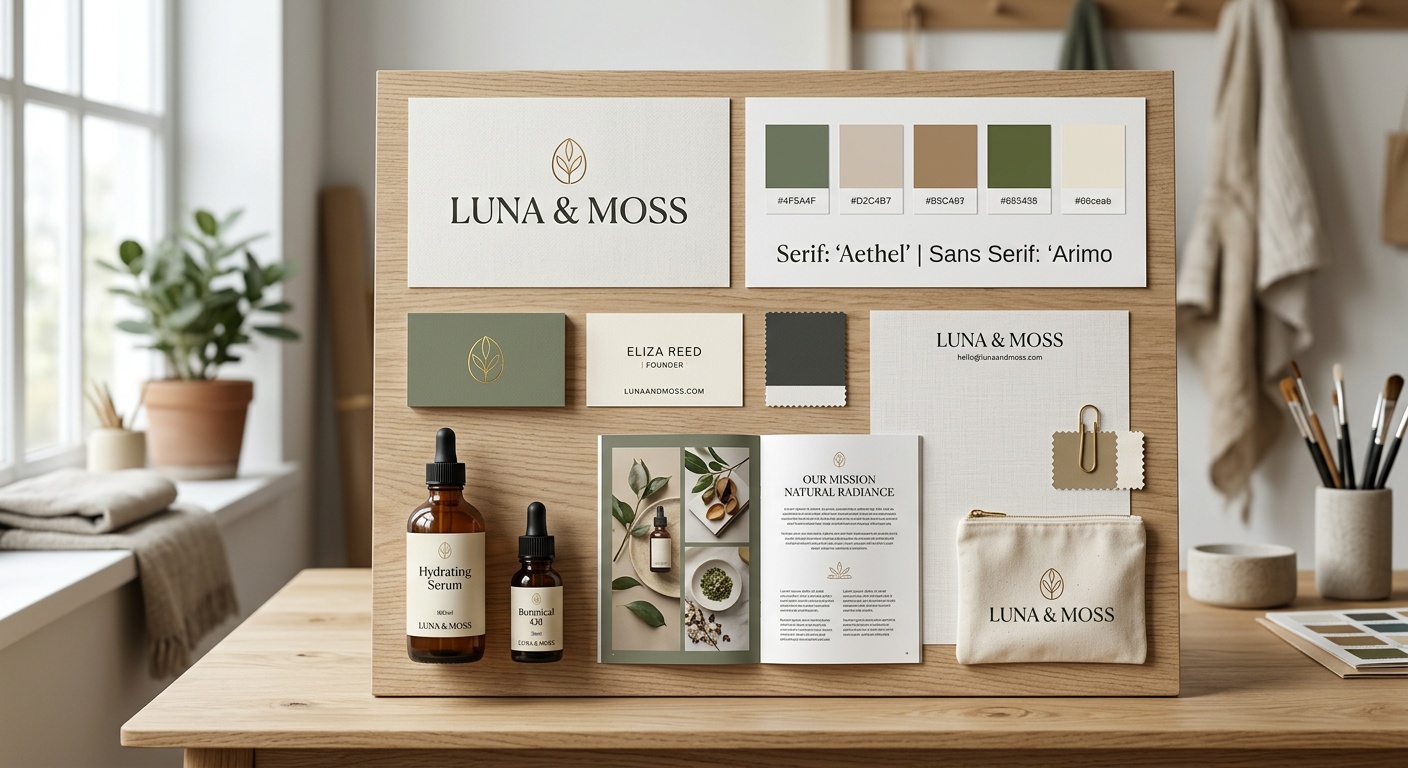
Why Small Businesses Need Professional Brand Management Services
Reading time: 9 minutes
Table of Contents
- The Brand Gap Nobody Talks About
- What Professional Brand Management Actually Covers
- The Real Cost of DIY Branding
- Case Studies: Three Small Businesses, Three Turnarounds
- Choosing the Right Brand Partner
- Common Challenges (and How to Solve Them)
- FAQs
- Your Roadmap Forward
The Brand Gap Nobody Talks About
Ever poured your savings into a business only to watch customers walk past it toward a competitor with a weaker product but a stronger name? You’re not imagining it. In 2026, buyers make snap judgments in under three seconds based purely on visual and verbal brand cues—before they’ve even read your pricing or product specs.
Here’s the straight talk: a logo is not a brand. A brand is the sum of every promise you make and keep, every interaction a customer has, and every feeling your business evokes when nobody’s watching. Small businesses often treat branding as a one-time design project rather than an ongoing strategic discipline—and that gap is exactly where revenue quietly leaks away.
According to a 2026 survey by the Small Business Growth Alliance, 67% of small business owners admitted they had never formally audited their brand messaging, even though 82% of consumers said inconsistent branding across platforms made them less likely to trust a company. That disconnect is costly, and it’s fixable.
What Professional Brand Management Actually Covers
Quick scenario: imagine you run a boutique skincare line. You’ve got a decent Instagram following, a website that looks fine on desktop but breaks on mobile, and packaging that hasn’t changed since launch. What exactly does a brand management service fix here?
Strategic Positioning
This is the foundation—defining who you serve, what makes you different, and why anyone should care. Professional brand strategists conduct competitor audits, customer interviews, and market gap analysis to pinpoint a positioning that’s both authentic and defensible.
Visual and Verbal Identity Systems
Beyond logos, this includes color psychology, typography, tone of voice, and messaging frameworks that stay consistent whether you’re posting on TikTok, printing a menu, or answering a customer service email.
Ongoing Brand Governance
This is the piece most small businesses skip entirely. Brand governance means monitoring how your identity is used across touchpoints, training staff on tone consistency, and updating guidelines as your business evolves—not just launching assets and walking away.
The Real Cost of DIY Branding
Well, here’s the uncomfortable truth: DIY branding isn’t free—it’s deferred spending with interest. Founders who cobble together their identity using templated logo generators and inconsistent messaging often end up paying more later for a full rebrand, plus the opportunity cost of lost trust along the way.
“Small businesses frequently underestimate how much unclear branding costs them in customer acquisition,” notes brand consultant Maria Alvarez, who has advised over 200 small businesses since 2019. “You’re not just paying for a nicer-looking logo—you’re paying to stop losing customers who don’t understand what you stand for.”
Where the Money Actually Goes
Consider the layered costs of neglecting brand management: wasted ad spend on messaging that doesn’t convert, higher customer churn from inconsistent experiences, and lower perceived value that forces you into price competition instead of value-based pricing.
Case Studies: Three Small Businesses, Three Turnarounds
The Coffee Roaster. A family-owned roastery in Portland struggled for years with a name customers couldn’t pronounce and packaging that looked identical to five competitors on the same shelf. After a six-month brand management engagement in 2025, they repositioned around “small-batch precision,” redesigned packaging with a distinct color code per roast level, and trained staff on a unified customer greeting script. Result: 39% increase in repeat purchases within eight months.
The Bookkeeping Firm. A two-person accounting practice was constantly mistaken for a generic tax-prep chain. Brand strategists helped them articulate a niche—serving creative freelancers—and rebuilt their website copy around that audience’s specific pain points. Inquiries from ideal-fit clients rose 52% in the first quarter after launch.
The Boutique Gym. A local fitness studio was bleeding members to bigger chains with lower prices. Rather than competing on cost, a brand audit revealed their real asset was community intimacy. They rebuilt their identity around “the gym that knows your name,” adjusted their social content strategy accordingly, and membership retention improved by 24% year-over-year.
Choosing the Right Brand Partner
Not all brand management services are created equal. Some focus purely on design; others specialize in strategy but outsource execution. Here’s a comparison to help you evaluate options realistically.
| Service Type | Average Monthly Cost | Typical Timeline to Results | Best For | Limitations |
|---|---|---|---|---|
| Freelance Designer | $500–$1,500 | 2–4 weeks | Logo/visual refresh only | No ongoing strategy or governance |
| Boutique Brand Agency | $2,000–$6,000 | 3–6 months | Full identity + messaging overhaul | Higher upfront investment |
| In-House Hire | $4,500–$8,000 | 6–12 months | Businesses scaling rapidly | Recruitment time, single perspective |
| Fractional Brand Consultant | $1,500–$3,500 | 1–3 months | Strategy-first small businesses | Execution often outsourced separately |
| DIY Templates/Software | $0–$300 | Immediate, low quality | Very early-stage testing | Inconsistent, no strategic backbone |
Common Challenges (and How to Solve Them)
Challenge One: “We Can’t Afford It Right Now”
Pro tip: brand management doesn’t require a six-figure agency retainer to start. Many fractional consultants offer scoped projects—a messaging audit, a competitor analysis, a style guide—priced individually. Start with the highest-leverage piece: usually positioning and messaging, since design without strategic clarity is just decoration.
Challenge Two: Inconsistent Internal Buy-In
Even the best brand guidelines fail if your team doesn’t follow them. Solve this by creating a simple one-page brand reference sheet—tone, colors, key phrases—and reviewing it during onboarding and quarterly team meetings. Consistency is a habit, not a document.
Challenge Three: Measuring Brand ROI
Unlike a paid ad campaign, branding’s impact is often indirect. Track proxy metrics instead: customer acquisition cost trends, repeat purchase rate, average deal size, and Net Promoter Score before and after brand initiatives. Businesses that track these consistently report clearer justification for continued brand investment.
FAQs
Is professional brand management only for businesses with big budgets?
No. Scoped engagements—like a messaging audit or a single strategy session—can start under $1,500 and still deliver measurable clarity. The key is starting with strategy before spending on visual assets.
How long before I see results from brand management efforts?
Most small businesses notice qualitative shifts—clearer customer conversations, more aligned marketing—within 60 to 90 days. Quantifiable revenue impact typically shows within six to twelve months, depending on your sales cycle.
Can I do brand management myself if I’m on a tight budget?
Partially, yes. You can conduct basic customer interviews and competitor research yourself. However, outside perspective is invaluable for objectivity—founders are often too close to their own business to spot blind spots a professional would catch immediately.
Your Roadmap Forward
Branding in 2026 isn’t a luxury reserved for companies with seven-figure marketing budgets—it’s becoming table stakes for any small business that wants to compete on value instead of price. Here’s how to move forward with intention:
- Audit before you invest — spend two weeks documenting every customer touchpoint and note where your messaging feels inconsistent.
- Start with strategy, not design — clarify positioning before touching your logo or color palette.
- Choose a partner that fits your stage — a fractional consultant may serve you better than a full agency retainer right now.
- Build internal consistency habits — create a one-page brand reference and revisit it quarterly.
- Track proxy metrics — retention, referral rate, and average deal size will tell you if your brand work is paying off.
The businesses that treat branding as an ongoing discipline rather than a one-time project are the ones quietly compounding trust—and revenue—while their competitors keep starting from scratch. So, where does your brand actually stand today, and what’s the first honest conversation you need to have about it this week?
About the Author
